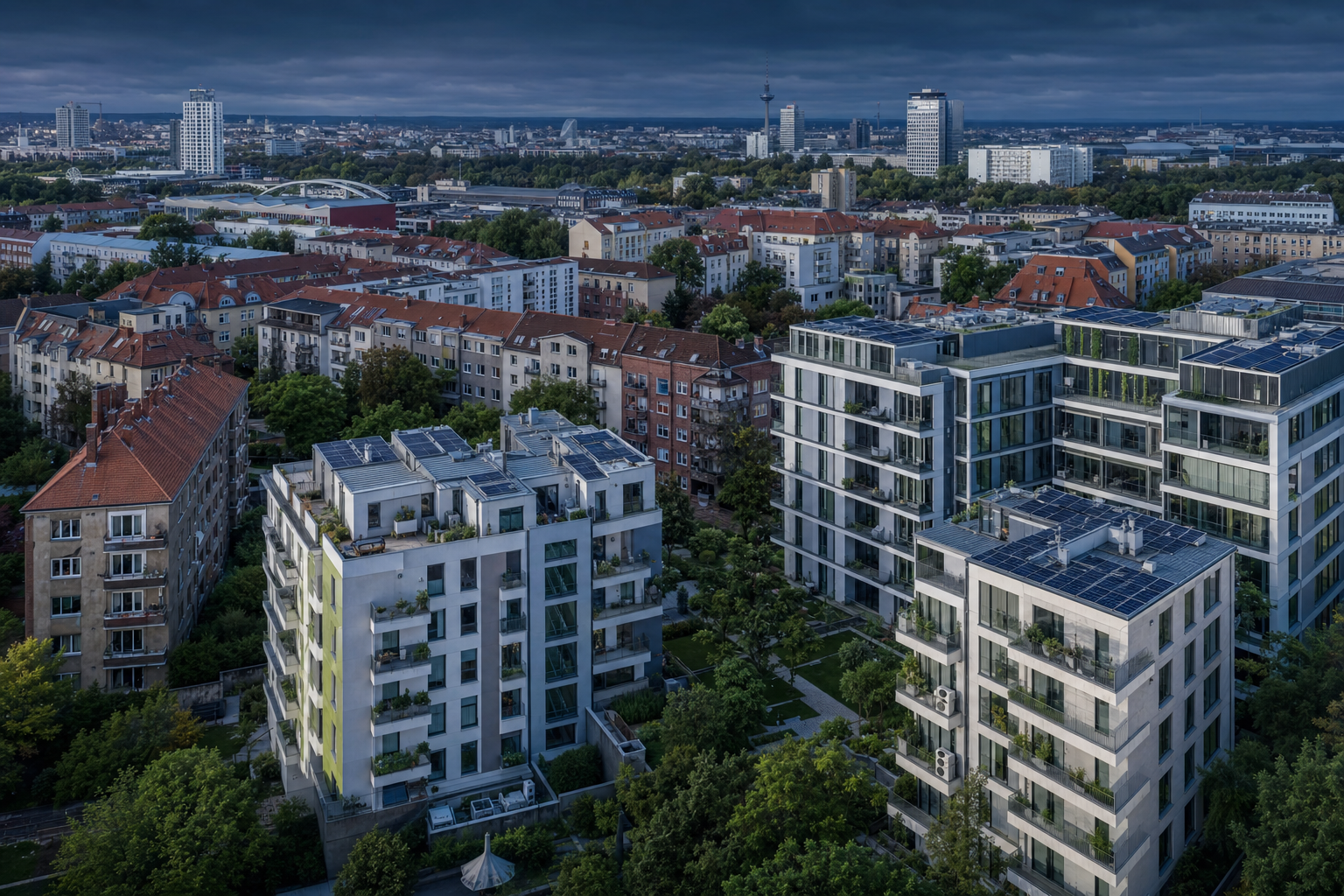
Evidence-based analysis of building energy renovation across Europe. Granular data tracking energy performance certificates and carbon intensity across the continent.
Buildings needing retrofits
Primary energy saving potential
Acceleration target by 2030
Member States & Territories
Spatial distribution of deep renovation activity across the Eurozone. Data normalized against 2020 energy auditing baselines.
| Country | Rate % | Δ 2020 |
|---|---|---|
| Germany | 1.42 | +0.12 |
| Netherlands | 1.75 | +0.21 |
| Sweden | 2.10 | +0.34 |
| France | 1.18 | +0.05 |
| Austria | 1.32 | +0.08 |
| Poland | 1.05 | -0.02 |
| Italy | 0.82 | +0.18 |
| Spain | 0.74 | 0.00 |
| Greece | 0.55 | -0.04 |
Distribution of energy performance classes across functional categories. Primary data sourced from combined national EPC registries.
Data Source: Eurostat SILC Energy Performance Index 2023. Revision 4.1
Quantitative modules for building energy assessment and renovation planning. Each instrument is calibrated against the EPBD Technical Reference Framework and IEA country-level benchmarks.
Estimate the capital payback period based on localized energy costs and building envelope characteristics.
Share of residential buildings rated F or G under national EPC systems. Buildings below this threshold face mandatory renovation under EPBD 2024 MEPS by 2033.
Sources: National EPC registries, Eurostat, Commission EPBD impact assessment 2023. * Estimated via observatory imputation for markets with <60% EPC coverage. Methodology notes.
Quantitative assessment of thermal conductivity and fire resistance of next-generation organic building insulation materials.
The Entranze Observatory compiles, validates and publishes granular data on energy performance certificates, renovation rates and NZEB compliance across all 27 EU member states. Our methodology draws on national EPC registries, Eurostat housing statistics, and peer-reviewed technical literature — subject to independent quality review before publication.
Research is led by an international team of building physicists, energy policy analysts and urban planners with over 60 combined years of European renovation research experience. Datasets are updated quarterly and uncertainty ranges are documented in accompanying methodology notes for every published analysis.
Meet the Research Team